

Above: From an in-class demonstration in progress for SFCC Watercolor II ’24, by Sudeshna Sengupta
Introduction
This page is a curated collection of resources for Sudeshna Sengupta’s art classes on rendering of poppies and other related botanicals inspired by Georgia O’Keeffe’s iconic compositions of flowers in close-up view.
O’Keeffe was drawn to the ideas of Arthur Wesley Dow, who encouraged artists to simplify the subject matter to find the essence of their forms in order to develop a personal style. An artist and educator, Dow published in 1899 Composition, a book that influenced generations of artists. O’Keeffe developed her personal vocabulary of compositional styles following some of these art principles. Organic forms and found objects in nature were some of O’Keeffe’s favorite subjects where she created her signature style of merging realism and abstraction. Although she rarely made anything look unidentifiable as a subject matter, she stylized and abstracted even her observational studies in her unique ways, often experimenting with scale, using cropping and zooming in from unusual angles much like some of the compositional elements found in traditional Japanese woodblock prints. She also approached this from the perspective of a photographer. Through her unique compositional treatment the seemingly ordinary forms in nature found extra-ordinary status, demanding the viewer’s attention, awareness, and appreciation for nature as narrated through her uniquely expressive compositional approach.
Georgia O’Keeffe’s Nature Close-ups
Pinterest Board compilation of images of Georgia O’Keeffe’s nature close-ups, primarily consisting of flowers and leaves.


Poppy by Georgia O’Keeffe, Oil on canvas, 1927
Links & Resources for Further Reading
Article: O’Keeffe , the gardener observing nature.
O’Keeffe exhibit in Europe: ‘Blue Morning-Glories, New Mexico,’ 1935, oil on canvas, 36 x 30.
The Wild Beauty of Georgia O’Keeffe
Georgia O’Keeffe’s Line, Color, Composition
Reference Photos & Resources
Pinterest Board on poppies for ideas and inspiration.
Extreme close-ups of the Icelandic Poppy
More images of poppies in close-up view
For in-class project:

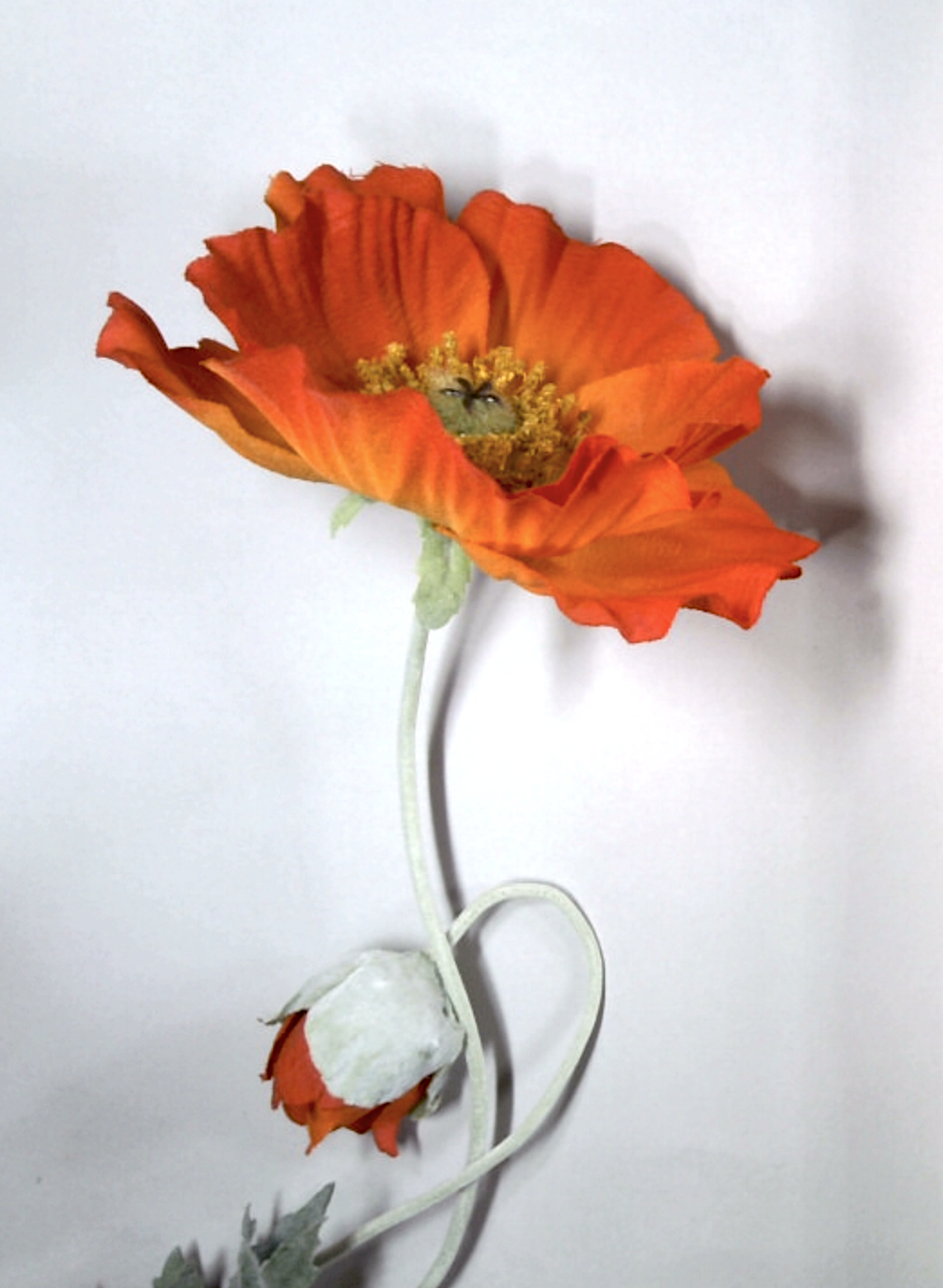
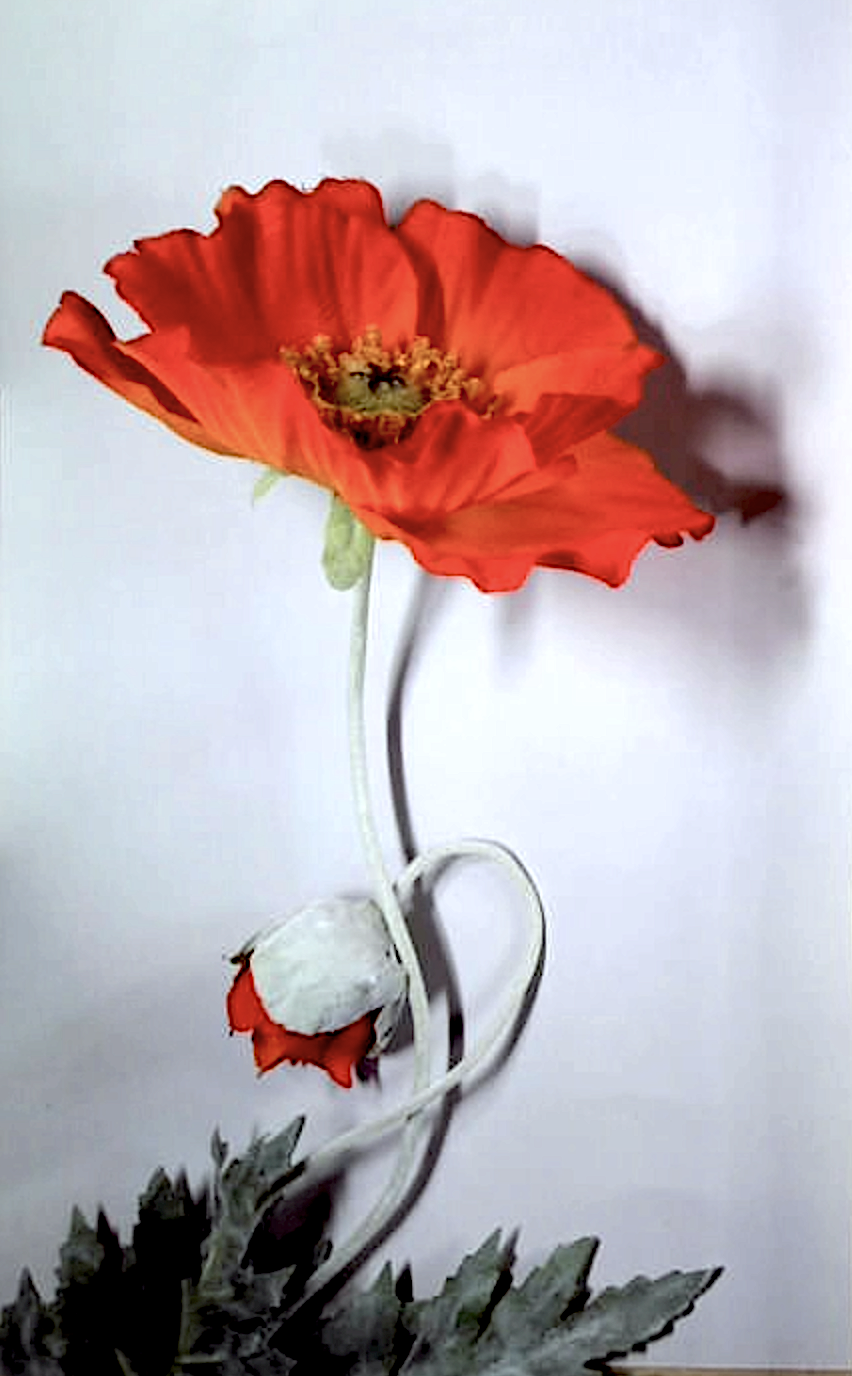


Inspiration image for wet-in-wet background:
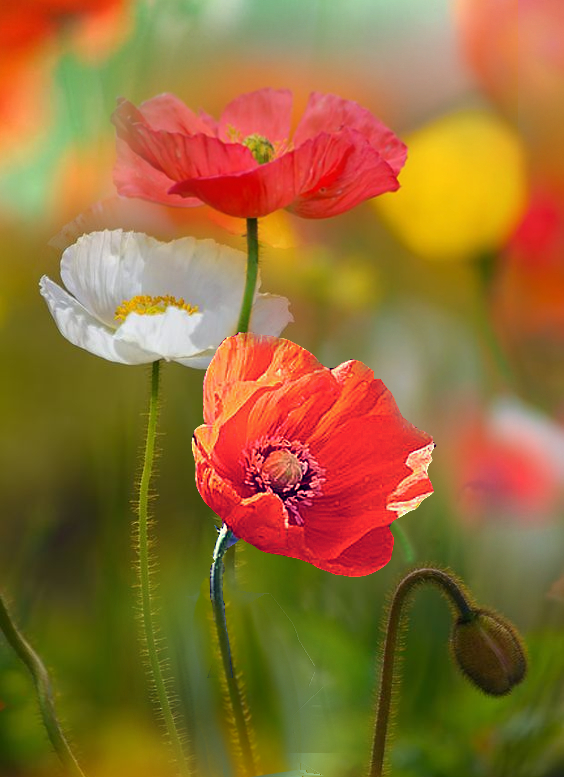
How to Draw Poppies
First and foremost, we need to capture the overall shape of the flower. For the ease of drawing the flower head-accurately, the background has been removed for each of the images in the group below, so we can “see” the overall shape more easily:
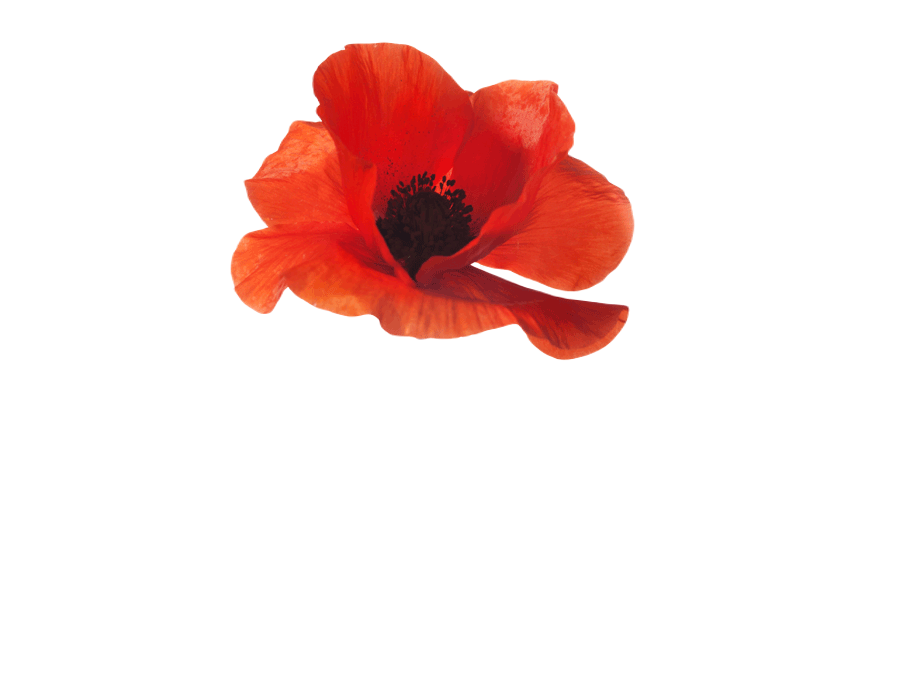
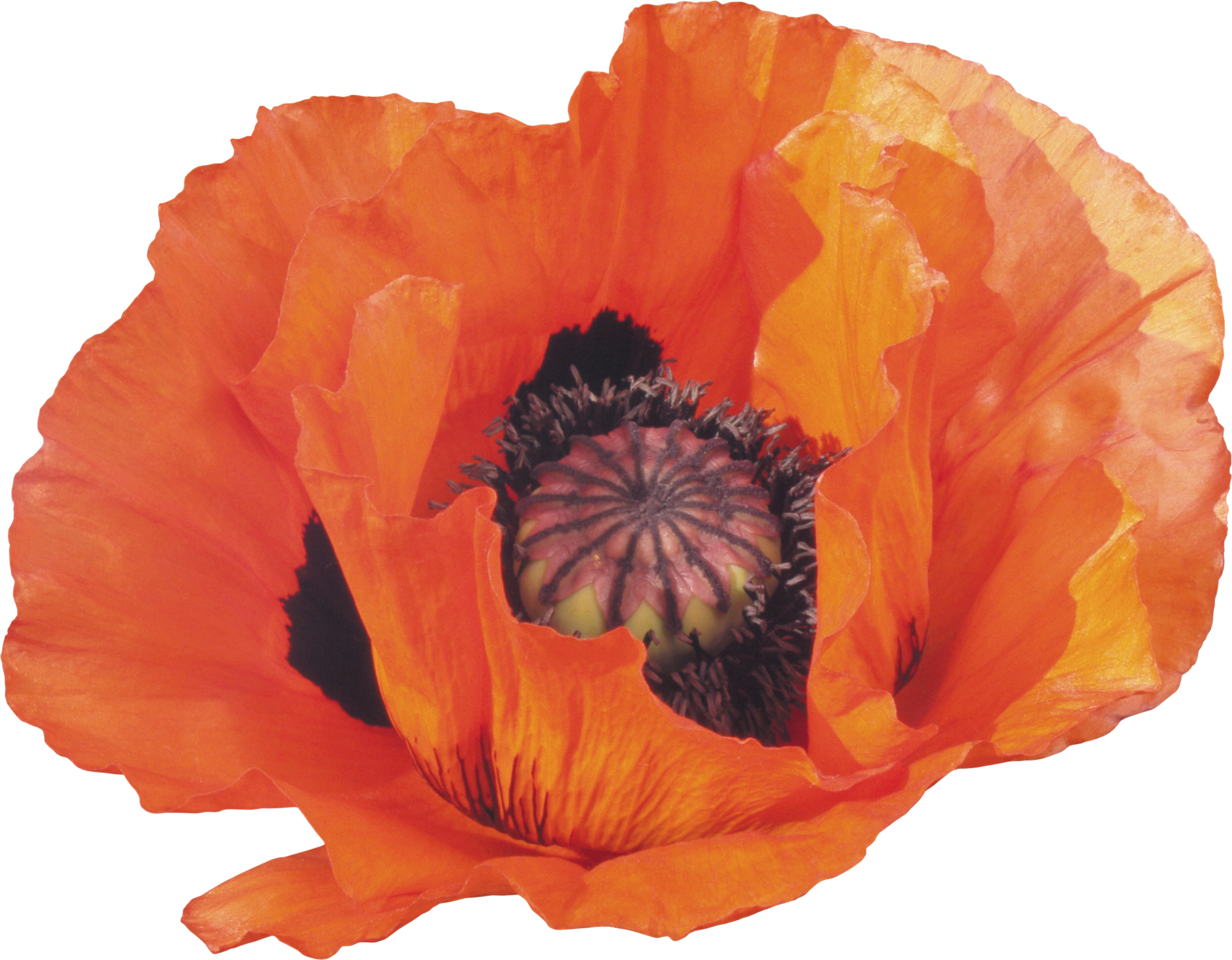

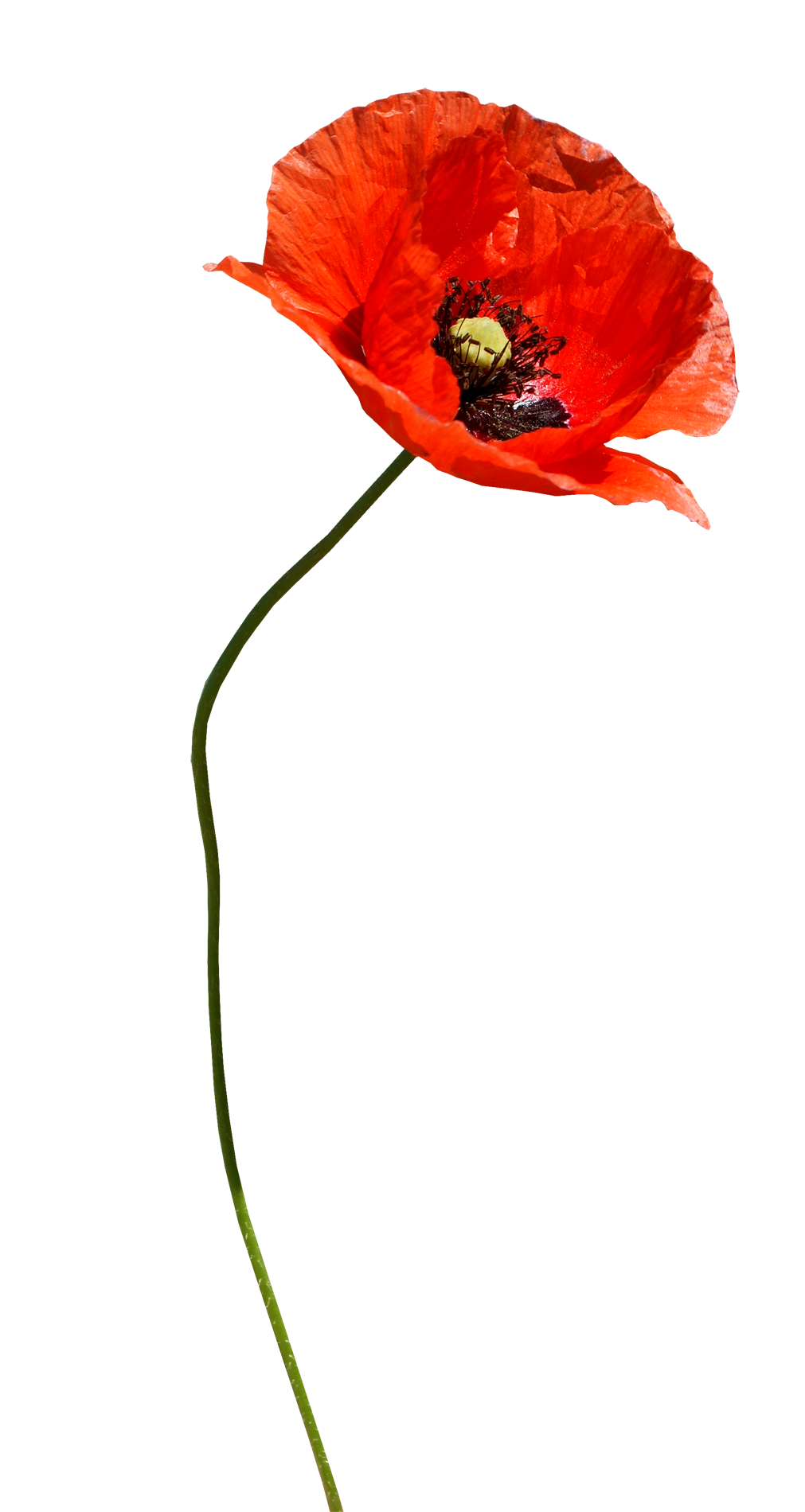

Shown below:
A step-by-step guide to start with a basic circular or ellipse shape with a smaller version of the same shape at the center, depending on the perspective (angle):

Further guidance on drawing poppies in various shapes and forms:
Step-by-step guide: https://lifestyle.howstuffworks.com/crafts/drawing/how-to-draw-a-poppy.htm
A good video tutorial on drawing poppies: https://www.youtube.com/watch?v=Q0r0U1D1-XY
A step-by-step tutorial with images for drawing a red poppy in color pencils from fabercastell.com, a manufacturer of color pencils. Disclaimer: No commercial or other ties with the websites linked from these pages.

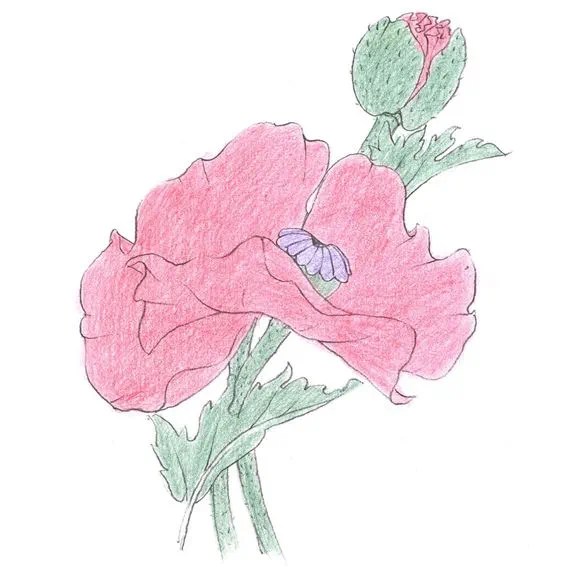

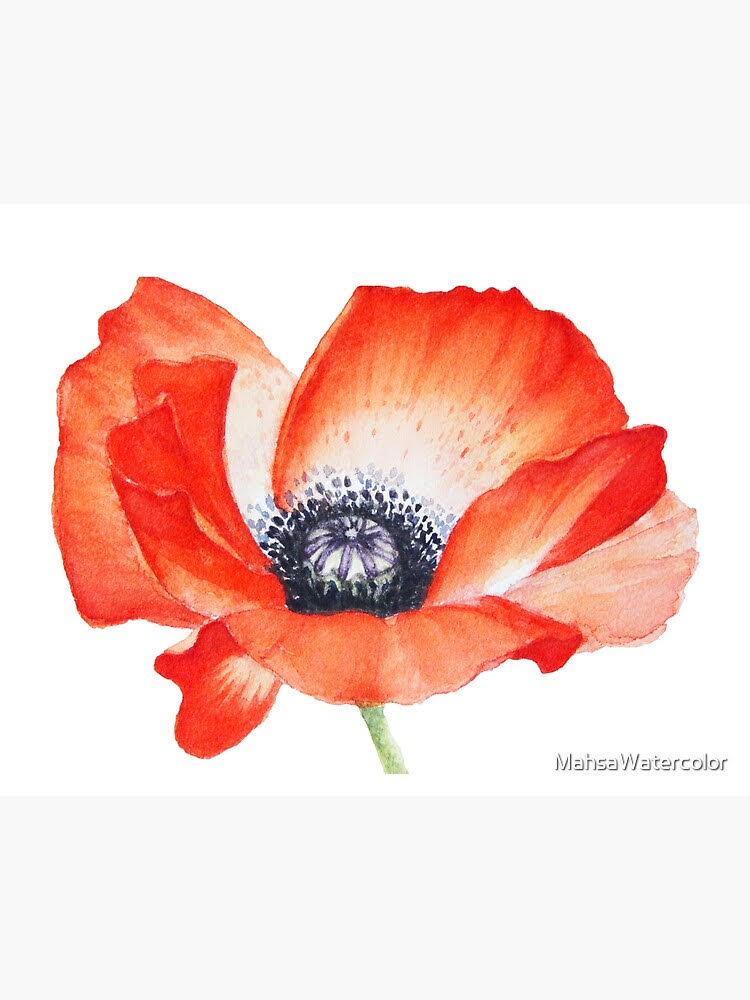

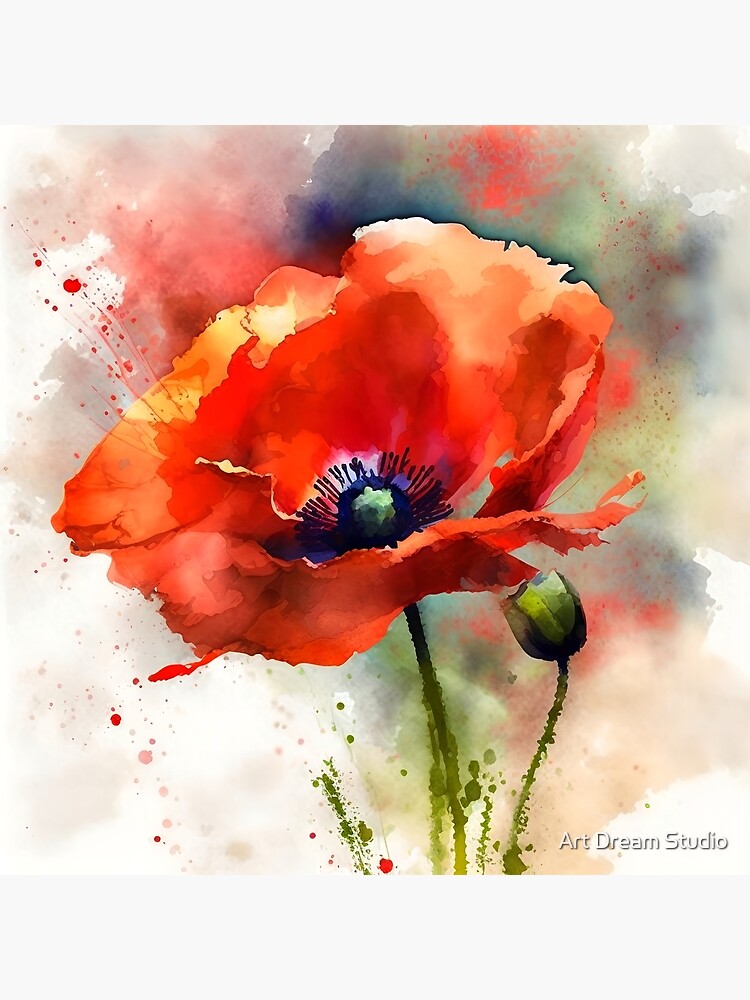

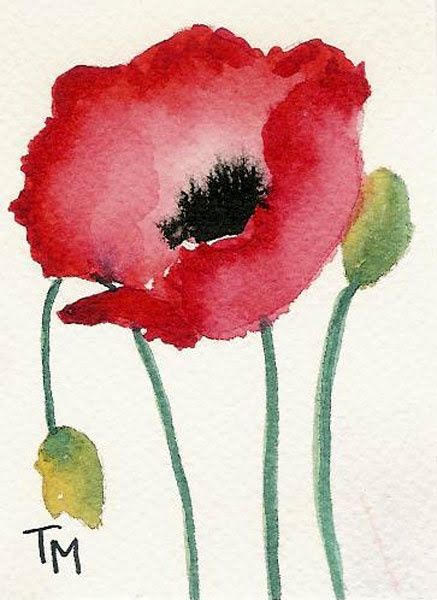

Above: watercolor by Mon Raa
The Positive & The Negative Spaces in Wet-in-Wet Watercolor
Next, after getting to know the basic shape and structure of the flower, let’s approach this project by defining the main positive shape in wet-in-wet technique first and then painting the background or the negative space around it, also in wet-in-wet technique. Learning to define a shape by painting around it is an essential skill to develop for watercolorists. Following my live demo, you may develop this through a focused exercise painting the same form as a positive shape at first and then its background as a negative area.
Watercolor Poppies:
To get in touch, please feel free to write to SudeshnasArt@gmail.com

 Notes & Doodles